ROI of Cybersecurity: Investment vs Risk for Belgian SMEs
Every business owner asks the same question: "Is cybersecurity really worth the money?" The answer is not just yes - it is one of the best investments you can make. Here is how to calculate the real return on your security spending and make the business case to your stakeholders.
With NIS2 now requiring cybersecurity investment, the question is not whether to spend, but how to spend wisely. Non-compliance carries significant penalties.
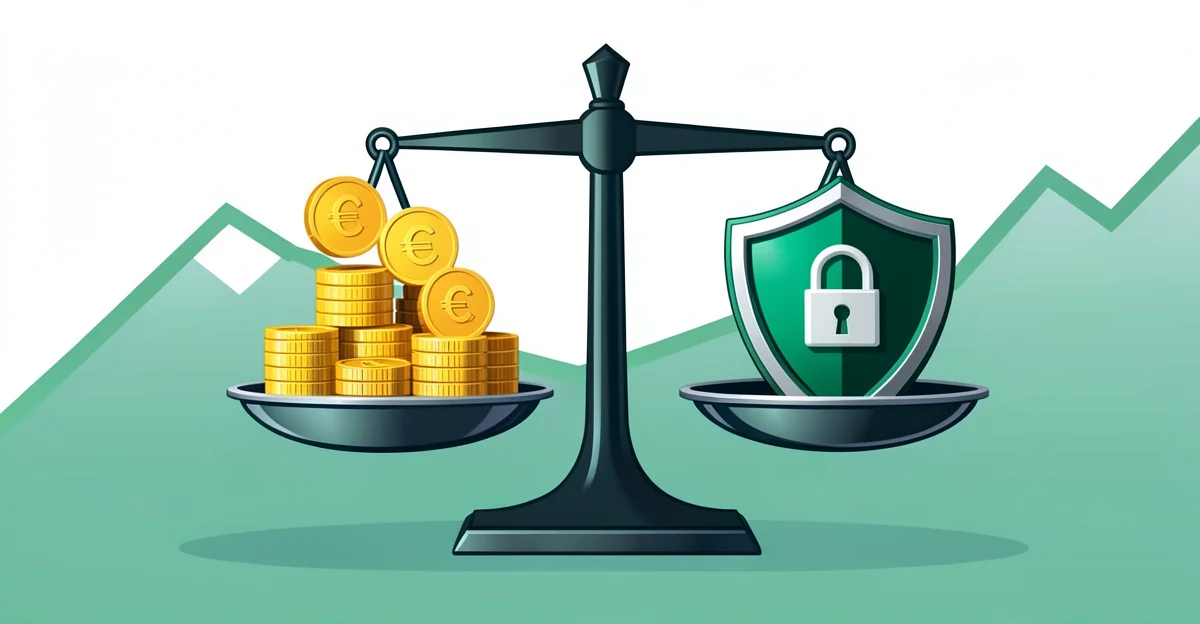
The Question Every Business Owner Asks
You have limited budget. Every euro needs to justify itself. So when someone suggests spending money on cybersecurity, the natural response is: "Is this really necessary? We have never had a problem."
- You cannot see what security prevents - only what it costs
- Breaches happen to "other companies" until they happen to you
- The investment seems abstract compared to tangible business needs
- Free tools exist - why pay for protection?
These are valid concerns. Let us address them with hard numbers.
The True Cost of Doing Nothing
Many business owners think "no security spending" means "no cost." In reality, inadequate protection is the most expensive option: Common threats like ransomware and phishing cause the majority of SME losses. A proper backup strategy alone can prevent catastrophic data loss.
Direct breach costs
€50,000 - €150,000Forensics, recovery, legal fees, customer notification when (not if) a breach occurs.
GDPR fines
Up to €20M or 4%The Belgian GBA actively fines SMEs for inadequate security measures leading to breaches.
Lost business
Significant customer churnCustomers leave when they discover you did not protect their data. They tell others. IBM reports reputational damage as the largest breach cost component.
Insurance denial
Full claim rejectionCyber insurers increasingly deny claims when basic security measures were missing.
Competitive disadvantage
Lost contractsLarge clients now require security certifications from suppliers. No certification = no contract.
The Surprisingly Affordable Cost of Protection
Here is what adequate cybersecurity actually costs for a typical Belgian SME (10-50 employees):
Basic security suite
€50-150/monthEndpoint protection, email filtering, basic monitoring for all employees.
Proper backup solution
€100-300/month3-2-1 backups with offsite storage and tested recovery procedures.
Employee training
€500-2,000/yearRegular phishing simulations and security awareness. The human element is involved in 60% of breaches (Verizon DBIR 2025).
CyberFundamentals assessment
€500-2,000 one-timeGap analysis and roadmap to compliance. Often partially subsidized.
Compliance platform
€99-299/monthEasy Cyber Protection: all-in-one platform for Belgian regulatory compliance.
Total: €200-500/month for comprehensive protection
Compare this to €50,000+ for a single breach.
The Insurance Analogy
Think about how you approach other business risks:
| Risk | Solution |
|---|---|
| Car accident | Mandatory insurance + safe driving You would never skip car insurance because "accidents happen to others" |
| Office fire | Fire insurance + prevention measures Fire extinguishers cost money, but no one questions them |
| Employee injury | Liability insurance + safety training You invest in prevention because claims are expensive |
| Cyberattack | Cyber insurance + security measures Yet many skip security because "we are too small to target" |
Cyber risk is now the #1 business risk for SMEs. Treat it accordingly.
Calculating Your Risk Exposure
Here is an illustrative framework to estimate cybersecurity ROI. Actual figures vary by industry and company size:
| Factor | Without Protection | With Protection |
|---|---|---|
| Annual breach probability | 25% | 5% |
| Average breach cost | €50,000 | €50,000 |
| Expected annual loss | €12,500 | €2,500 |
| Protection cost | €0 | €1,200/year |
| Net expected cost | €12,500 | €3,700 |
Net annual savings: €8,800
That is a 733% ROI on your security investment.
What Adequate Protection Actually Costs
For Belgian SMEs, "adequate protection" means meeting CyberFundamentals Basic level. Here are realistic monthly costs by company size:
Micro (1-9 employees)
€99-199/monthEndpoint protection, cloud backup, basic training, compliance tracking
Small (10-49 employees)
€199-499/monthAbove + email security, vulnerability scanning, incident response plan
Medium (50-249 employees)
€499-999/monthAbove + SIEM basics, dedicated security officer hours, audit preparation
Hidden Benefits Beyond Breach Prevention
ROI calculations often miss significant non-breach benefits:
Customer trust and retention
Customers increasingly ask about data protection. Demonstrable security wins and keeps business.
Stronger retentionInsurance premium reduction
Cyber insurers increasingly offer premium discounts for CyberFundamentals certification.
€500-2,000/year savedCompliance readiness
GDPR, NIS2, and sector requirements are easier to meet with proper security foundations.
Avoid €10K-50K finesCompetitive advantage
Win contracts requiring security certifications. Stand out from unprotected competitors.
New revenue opportunitiesOperational efficiency
Good security practices improve IT hygiene overall - faster systems, fewer problems.
Better IT hygieneThe "Good Enough" Threshold
Not every business needs enterprise-grade security. The key is finding your "good enough" threshold. These tiers align with CCB CyberFundamentals levels:
Minimum viable security
Antivirus, basic backup, MFA on critical accounts. Prevents opportunistic attacks.
CyFun Basic (sweet spot) Recommended
Counters 82% of successful attacks (CCB retroanalysis). Best value for most SMEs.
CyFun Important
Counters 94% of successful attacks (CCB retroanalysis). For regulated industries.
CyFun Essential / Enterprise
Counters 100% of analyzed attacks (CCB retroanalysis). Critical infrastructure level.
For most Belgian SMEs, CyFun Basic (€99-199/month) offers the best value. It counters 82% of successful attacks according to the CCB, at a fraction of enterprise budgets.
Making the Business Case to Management
When presenting security investment to leadership or board, frame it in business terms:
Don't:
- Do not lead with technical threats - executives tune out jargon
- Do not use fear - it creates resistance and sounds like sales tactics
- Do not ask for budget without showing ROI
- Do not compare to competitors without context
Do:
Present the ROI calculation above with your specific numbers
"We are currently self-insuring against a €50K risk for €0. This proposal costs €1,200/year to cover that risk."
"GDPR requires appropriate security measures. This demonstrates due diligence."
"Our cyber insurer requires these measures. Without them, claims may be denied."
"Three prospects this year asked about our security certifications."
Easy Cyber Protection: Belgian SME Security Made Simple
We built Easy Cyber Protection specifically for Belgian SMEs who need CyberFundamentals compliance without enterprise complexity:
- All-in-one platform for CyberFundamentals Basic compliance
- Dutch, French, and English support for your Belgian team
- Step-by-step guidance - no security expertise required
- Evidence collection and audit preparation built-in
- Starts at €99/month for micro and small businesses
Frequently Asked Questions
How do I calculate cybersecurity ROI?
Use the formula: ROI = (Risk Reduction - Security Cost) / Security Cost. Calculate risk reduction as: (Breach Probability Without Protection x Average Breach Cost) - (Breach Probability With Protection x Average Breach Cost). For most SMEs, this shows 5-10x ROI on basic security investments.
What is the minimum I should spend on security?
At minimum, spend €50-100/month on endpoint protection, backup, and MFA. For proper protection meeting CyFun Basic (counters 82% of attacks per CCB), budget €99-199/month for a comprehensive solution like Easy Cyber Protection that includes compliance tracking.
Does cyber insurance replace security investment?
No. Cyber insurance and security are complementary, not alternatives. Insurance covers costs after a breach; security prevents breaches. Most insurers require minimum security measures and may deny claims if you lack them. Think of security as the fire extinguisher and insurance as fire coverage.
How do I convince my boss to invest in security?
Present it as risk management, not IT spending. Show the ROI calculation with real numbers. Highlight compliance requirements (GDPR, NIS2), insurance implications, and customer expectations. Frame it as: "We currently self-insure €50K risk for €0. This proposal costs €1,200/year to mitigate that risk."
Is free security software good enough?
Free tools provide basic protection but have significant gaps: no centralized management, limited threat detection, no compliance reporting, and no support. For personal use, free is often adequate. For business with customer data, regulatory requirements, and reputation at stake, the €99/month for proper protection is worth it.
Related Articles
Sources
- IBM Cost of a Data Breach Report 2025 — Annual global analysis of breach costs and security ROI
- CCB CyberFundamentals Framework — Official Belgian cybersecurity framework with cost estimates
- ENISA Cybersecurity for SMEs — EU guidelines for SME security and investment advice
- Ponemon Institute Research — Research on cybersecurity ROI and risk calculations
- Verizon Data Breach Investigations Report — Annual analysis of breach statistics and prevention effectiveness